The SteadyFour Plate
One plate. Every meal.
The short answer. The SteadyFour Plate has four parts: non-starchy vegetables (half), lean protein eaten first (a quarter), high-fibre carbohydrate (a quarter) and healthy fat (a thumb). It gives you enough protein, fibre and nutrients in a small volume of food, which matters most when your appetite is low.
By Caryn Levick, Clinical Nutritionist and Naturopath · Last reviewed November 2026
The four parts
Build each meal on this shape
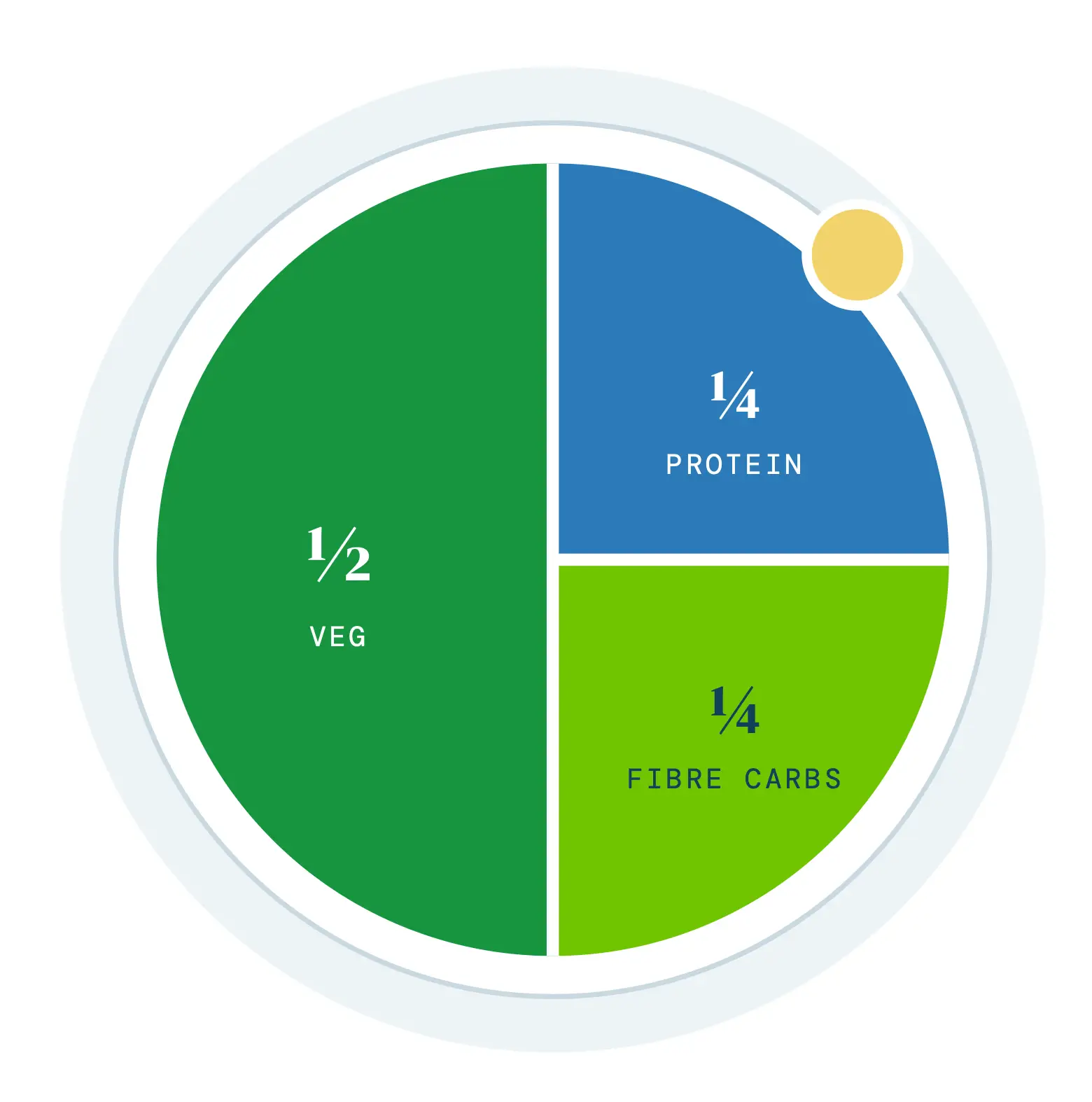
Lean protein, eaten first
Protein protects muscle, and muscle is the weight you want to keep. When you can only manage a few mouthfuls, make them the protein. Fish, chicken, eggs, tofu, tempeh, Greek yoghurt, cottage cheese and legumes all count. The palm of your hand is a useful guide.
Non-starchy vegetables
Vegetables bring fibre, fluid and the nutrients that fall short first when you eat less. Leafy greens, broccoli, zucchini, capsicum (bell pepper), carrots, mushrooms. If raw salads sit heavily, cook them. Soft, cooked vegetables are easier on a slow stomach.
High-fibre carbohydrate
Oats, quinoa, barley, brown rice, sweet potato, lentils and berries feed your gut bacteria and give steady energy. Build fibre up slowly and keep your fluids up as you do.
Healthy fat
Olive oil, avocado, nuts, seeds and oily fish help you absorb nutrients and make a meal satisfying. Keep the portion small. Fat slows the stomach further, and too much can bring on nausea.
When your appetite is tiny
Shrink the plate, not the protein
Eat the protein quarter first, then the vegetables, then the carbohydrate.
Use a smaller plate. Shrink the plate, not the protein.
Split one plate into two sittings, two to three hours apart.
Choose softer textures: soups, eggs, yoghurt, fish, slow-cooked meals.
Drink between meals more than with them, so food has room.
Stop at the first sign of comfortable fullness. You can come back to it later.
When your appetite comes back
The plate does not change. The portions do.
The order stays the same: protein first, then vegetables, then carbohydrate, with a thumb of fat. People who have practised the shape while their appetite was quiet find it is already a habit when they need it most.
Four questions before you eat
Twenty seconds. Then you know.
Where is the protein?
Is the plate small enough?
Is there a gentle fibre?
Is the fat only a thumb?
What a four looks like
Real meals, built on the shape
| Meal | Protein | Vegetables | High-fibre carb | Fat |
|---|---|---|---|---|
| Breakfast | Two eggs | Wilted spinach and tomato | One slice of wholegrain toast | Olive oil in the pan |
| Lunch | Tinned tuna | Rocket (arugula) and cucumber | White beans | Olive oil and lemon |
| Dinner | Baked salmon | Greens and zucchini | Quinoa | The salmon itself |
| Small appetite | Greek yoghurt | Grated carrot on the side, or skip and add at the next meal | Oats and berries | A few walnuts |
Questions people ask
Straight answers
Do I need to weigh or count anything?
No. The shape does most of the work. If you want a number for protein, the 7-Day Guide shows you how to find yours.
What if I can only eat a few mouthfuls?
Make them protein, and come back to the rest of the plate in two to three hours.
Does this work if I am vegetarian or vegan?
Yes. Use tofu, tempeh, lentils, beans and fortified soy yoghurt in the protein quarter.
Does this work if I am not on a medicine?
Yes. It is a balanced plate for anyone. The medicine changes the portion, not the shape.
Is this medical advice?
No. It is general food education. Protein, fluid and nutrient targets can differ for people with kidney disease, diabetes, pregnancy or other conditions, so check with your prescriber or doctor.